For three summers, listing a home on Lake Travis meant apologizing for the view. Docks sat stranded fifty yards from water. The boat ramp at Cypress Creek Park dead-ended into dry limestone. Then, in the third week of July 2026, days of historic Hill Country rain reversed years of drought in a matter of days, and the lake did something it hadn't done since 2019: it filled all the way to the top.
If you own a waterfront home in Lakeway and you're thinking about listing this fall, that story is genuinely good news for your marketing photos. It is not the whole story for your paperwork.
What Actually Happened, In Order
The distinction that matters for your disclosure form comes down to timing, so it's worth laying out the sequence plainly.
| When | Lake Travis Level | What Happened |
|---|---|---|
| Early July 2026 | Well below the 681-foot full pool mark | Years of drought leave lakebed exposed at parks and private docks around the lake |
| July 16-17, 2026 | Rising rapidly | Historic rain across the Hill Country sends runoff into the Highland Lakes system; the Lower Colorado River Authority projects the lake could climb five to seven feet in a single day |
| July 18, 2026 | Reaches full pool that evening | LCRA opens floodgates at Mansfield Dam for the first time since 2019; water reaches benches at Lakeway City Park that normally sit well back from shore, and rising water pushes toward homes at Graveyard Point |
| Mid-to-late July 2026 | Peaks in the mid-680s | The lake sits several feet above its normal full-pool level while floodgates continue managing the surge |
| Late July 2026 | Recedes to about 681 feet | LCRA reports the lake back near its normal full-pool mark as floodgate operations wind down |
| August 23, 2026 | About 97% full | The lake holds just under full pool, still dramatically higher than the drought-era lows of the past several years |
Two different physical events are stacked in that timeline. The first is the natural rise on July 16 and 17, when rainfall and runoff pushed the lake up before anyone at LCRA touched a floodgate. The second is what happened starting July 18, when LCRA deliberately opened the gates at Mansfield Dam to move floodwater downstream and manage the lake's flood pool. Both raised the water level, but for different reasons.
Two Boxes, Not One
Texas Property Code Section 5.008 requires most home sellers to complete a written disclosure notice before closing, and the flooding section of that form is more specific than most sellers assume. It doesn't just ask "was there ever flooding." It separates the question into distinct checkboxes, including one for flooding tied to "a failure or breach of a reservoir or a controlled or emergency release of water from a reservoir," and a separate one for water penetration into a structure "due to a natural flood event."
That distinction exists because the two situations mean different things to a buyer evaluating risk. One event involved rainfall runoff. The other involved water rising after LCRA opened the floodgates at Mansfield Dam.
At Graveyard Point and other low-lying stretches of Lakeway's shoreline, water reached patios or moved toward living spaces while LCRA had Mansfield Dam's gates open. Elsewhere on the lake, water may have risen and receded entirely during the July 16 and 17 window, before any floodgate opened.
This isn't a distinction most sellers think about when they're just trying to check a box and move on to the next page. It's also not something this post can settle for you. If your home saw any water intrusion during the last two weeks of July, walk through the actual timeline with whoever prepared your closing paperwork, or with an attorney, before you decide which box applies. Getting the mechanism right matters more than getting the box filled in quickly.
The Dock Question Nobody Thinks to Ask Until Closing
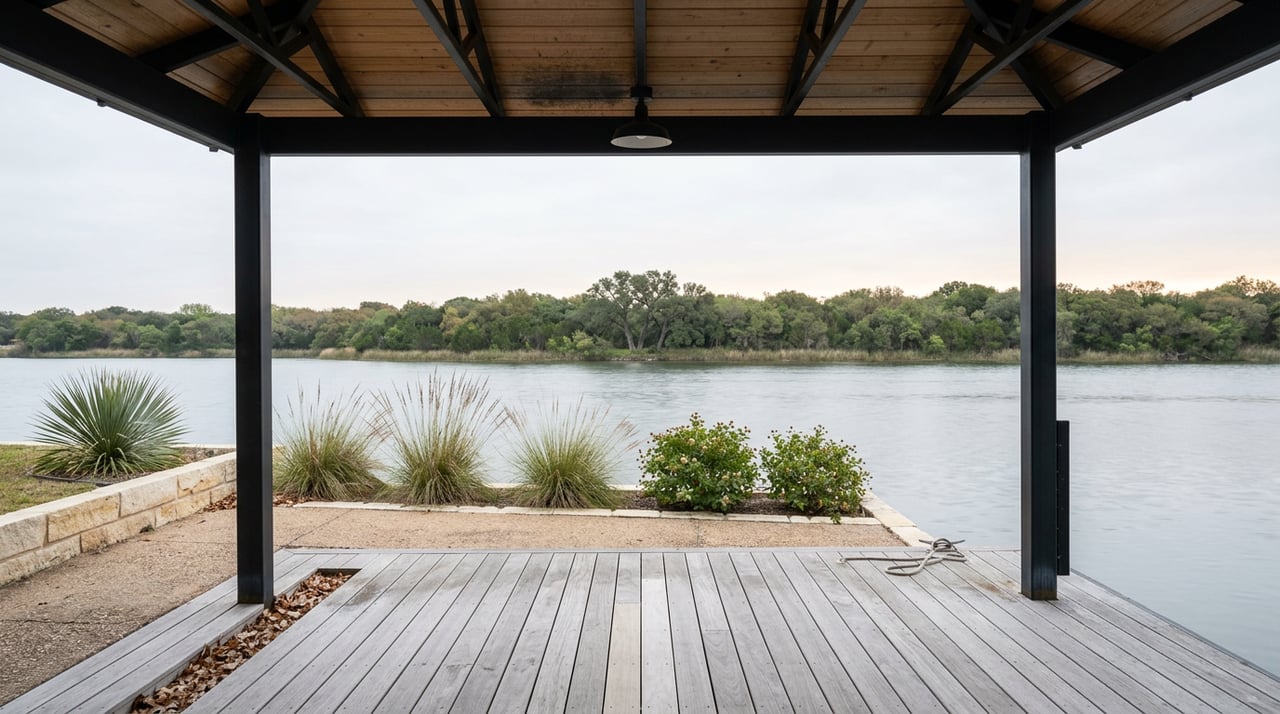
The disclosure form isn't the only piece of paperwork the flood touched. If your property has a dock, boathouse, or other shoreline structure, the high water is a reason to check its permit status before you list, not after an inspection turns it up.
LCRA doesn't require a permit for a residential dock of 1,500 square feet or less, but the structure still has to meet Highland Lakes safety standards for flotation, anchoring, and access. More importantly, pull together any permit documentation before you list.
Lakeway adds another layer worth knowing about. The city has an interlocal agreement with LCRA covering part of the Highland Lakes Watershed Ordinance, which means some shoreline and stormwater approvals inside city limits run through the City of Lakeway rather than directly through LCRA. Before you list, it's worth confirming which entity actually governs your specific dock or shoreline improvement, and whether the structure moved, shifted, or sustained any damage during the surge in July. A buyer's inspector or their own diligence will ask the same question. Better to have the answer ready than to discover a gap during option period.
The Marketing Case Is Real. It Just Isn't the Whole Case
None of this is a reason to hold off on listing. A full lake is a legitimate selling point. Waterfront homes on Lake Travis have been commanding a price premium of roughly 40 to 80 percent over comparable non-waterfront properties as of mid-2026, with open-water frontage in Lakeway starting around $1.5 million. That premium is easier to justify when a buyer can walk down to a dock that actually reaches deep water, instead of touring a boat ramp that stops short of the shoreline the way ramps at places like Cypress Creek Park did for years during the drought.
The paperwork doesn't undo that advantage. It just means the advantage has to survive a buyer's due diligence, not just a listing photo. A clean disclosure form that correctly identifies whether your property's July flooding came from rainfall or from a reservoir release, paired with dock permit documentation that's actually current and matches the structure as it exists today, is what turns a strong marketing story into a deal that closes without a renegotiation at the eleventh hour.
A Few Questions Worth Settling Before You List
Do I still need to disclose the July flood if my home never took on water? The disclosure form asks about flooding that affected the structure, not the general area. If water reached your yard or dock but never entered the home, that's a different answer than if it reached living space. Walk through your specific situation rather than assuming the neighborhood's experience is your experience.
Does a fuller lake change anything about my existing dock permit? Not by itself. A higher water level doesn't reissue or update a permit. If your dock is older, this is a reasonable moment to pull the paperwork and confirm it still matches what's built, especially if anything shifted during the high water in July.
What if I genuinely can't tell whether the water came from rainfall or from the floodgate release? That's common, since both happened within days of each other. This is exactly the kind of timeline question worth bringing to a real estate attorney or a title company before you sign a disclosure form, rather than guessing.
If you're weighing whether now is the right time to list a Lakeway waterfront property, or you just want a second set of eyes on a disclosure form before it goes to a buyer, CBSrealty has spent decades handling exactly this kind of Lake Travis paperwork. Call Chet for a free home consultation.
This article is general information, not legal, tax or financial advice. Consult a qualified professional about your situation.