





How Much Is Your Home Worth?
- Instant property valuation
- Expert advice
- Sell for more
Loading valuation...
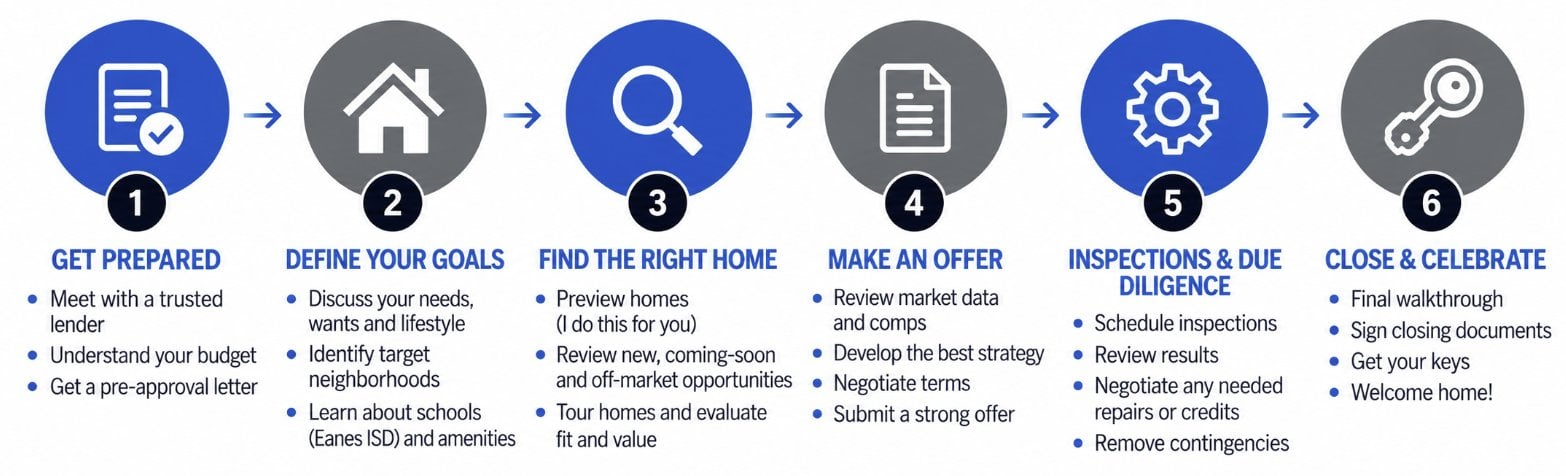
BELOW ARE 8 GERERIC STEPS WHEN BUYING A HOME IN TEXAS.
Once you have found a property you like, submit an Offer. Be sure to review comparable properties in the area to determine appropriate pricing. Also remember that large items are often negotiable, such as the refrigerator, a pool table, or even certain pieces of furniture or art.
The Goal of the Termination/Option Period (typically 5-10 days), is to give the buyer time to inspect the home and negotiate any needed repairs. If the buyer is not satisfied with the condition of the property or the repairs the seller is willing to provide, the buyer may terminate the contract for ANY reason and receive a refund of the earnest money (see par 23 of contract).
Negotiate any needed repairs before the 5-10 day Option Period is through. You can also ask for a Seller Credit for the repair amount, in the form of a 'Seller Paid Closing Cost'.
After the Option Period your Lender gets busy! They have the Contract and the negotiated repair Amendment. They will push you for all remaining Documents needed. Example: Appraisal, Survey, Home insurance info, Additional banking and work documents, ...
While your lender is processing your loan, go ahead and schedule your Movers and set up your Utilities. You should also begin preparing to wire the funds you'll need for closing.
Typically done 24-72 hours before closing to confirm that the property is in the condition agreed upon in the contract. It allows the buyer to verify that any negotiated repairs have been completed and to ensure no new damage has occured during their move-out.
When reviewing the Closing Statement, verify the correct purchase price, credits, and fees for accuracy before signing. Once you confirm the amounts, you'll need to wire funds to the title company.
Close and Fund on your new home! You closing documents will be notarized, so please bring your drivers license or a valid passport. Additional thoughts: Make sure you know where your Water and Gas shut-offs are, Clear the garage door signal and establish a new code, Definitely change the locks, ...
Many buyers begin the home buying process thinking a Realtor is simply there to open doors. In reality, your agent is there to guide you through a complex process that you will likely only go through a few times, so you should not be expected to be the expert.
The issue is that many people end up working with whoever Zillow connects them with when they request a showing. It could be a family member or friend who sells real estate part time, or another agent who lacks the experience needed to truly guide you.
There are more than 18,000 agents in the Austin Board of Realtors, so how do you choose the right one? Reviews can be helpful, but it is just as important to find someone with well rounded experience across all aspects of real estate. That includes Buying, Selling, Investing, Remodeling, and the Loan Process. These areas of knowledge make a significant difference when you are choosing an agent.
Think of it this way. If you were going on a safari, would you choose a family friend who took a course but has never actually been there? That is the situation many buyers find themselves in when they choose an inexperienced real estate agent.
Before submitting an offer on a home, it is important to understand the age and condition of major systems and components. These can significantly impact both your negotiation strategy and future expenses.
Start by asking about the HVAC system, water heater, and roof. HVAC systems typically last between 10 and 15 years. Tank water heaters generally last 8 to 12 years, although hard water can shorten their lifespan if they have not been properly maintained. The roof, especially if it has shingles, can present one of the biggest concerns. Many insurance companies may not provide coverage for a roof that is more than 8 years old, so knowing its age is essential.
It is also helpful to review recent utility bills. This gives you a clearer picture of ongoing costs and helps you budget more accurately for the home.
If the property includes a swimming pool or a septic system, both should be inspected. Understanding their age and condition can help you anticipate maintenance needs and avoid unexpected expenses.
An experienced real estate agent understands there are many ways to win in a multiple-offer situation. When representing a buyer, these are five of the many strategies I focus on:
1) Maintain positive and consistent communication between the listing agent and the buyer’s agent. A strong rapport can influence how an offer is perceived.
2) Identify what matters most to the seller, since it is not always the highest price. Terms and timing can be just as important.
3) Determine whether the seller needs a temporary leaseback after closing, which can make your offer more appealing and flexible.
4) Consider whether the buyer is willing to include an appraisal waiver, helping the offer compete more effectively against cash buyers.
5) Strengthen the offer by increasing earnest money and the option fee beyond typical amounts, signaling commitment and financial strength.
As a buyer, the goal is to leverage every available advantage... Here's an extra tip: Have your loan officer call the selling agent after submitting the offer. This extra step builds confidence and reassures the listing agent that the transaction will be smooth and reliable.
COMING SOON!
COMING SOON!
Estimate your monthly mortgage payment, including the principal and interest, property taxes, and HOA. Adjust the values to generate a more accurate rate.

A pre-listing inspection helps uncover issues before buyers do.
Typical benefits:
· Identify safety or code problems
· Catch roof, HVAC, plumbing, or electrical issues
· Avoid surprise repair negotiations later
· Build buyer confidence
Many sellers fix major items ahead of time and disclose the inspection report.
A good agent helps prioritize improvements so you don’t overspend on the wrong things.
Look for:
· Neighborhood expertise
· Strong marketing/photos
· Pricing strategy experience
· Contractor/vendor network
This is one of the highest ROI tasks.
Buyers want to see:
· Space
· Storage
· Clean surfaces
· Open flow
Common decluttering targets:
· Kitchen counters
· Bathroom products
· Closets
· Garage shelving
· Kids’ toys
· Excess furniture
Many stagers say removing 25–50% of visible items dramatically improves photos.
A stager or decorator helps make the house feel:
· Larger
· Brighter
· More modern
· More emotionally appealing
They often recommend:
· Rearranging furniture
· Neutralizing colors
· Adding lighting
· Removing oversized pieces
· Updating linens/art/accessories
You don’t always need full staging — even a consultation can help.
Homes should feel cleaner than “normal clean.”
Focus on:
· Baseboards, Windows,
· Carpets, Ceiling fans,
· Appliances, Pet odors
A spotless home signals good maintenance...
Small deferred maintenance creates buyer anxiety.
Typical fixes:
· Dripping faucets, Burned-out bulbs
· Loose handles, Squeaky doors
· Cracked caulk, Nail holes
Buyers often assume visible small problems mean hidden large ones.
First impressions matter heavily.
Common improvements:
· Fresh mulch
· Trim bushes
· Mow/edge lawn
· Pressure wash driveway
· Paint front door
· Replace old house numbers or mailbox
· Add seasonal flowers
Buyers often form opinions before entering the house.
Dark homes show poorly.
Realtors commonly recommend:
· Replacing outdated fixtures
· Using higher-lumen warm bulbs
· Opening blinds/curtains
· Adding lamps in dark corners
Bright spaces photograph better and feel larger.
Partially moving before listing often improves presentation.
Benefits:
· Rooms feel larger
· Better traffic flow
· Cleaner photography
· Easier eventual move
Many sellers rent a short-term storage unit.
Small cosmetic upgrades often outperform major renovations.
High-impact updates:
· Cabinet hardware
· Faucets
· Light fixtures
· Bathroom mirrors
· Modern switch plates
· Fresh towels/bedding
Agents usually discourage expensive remodels unless the home is severely dated.
Especially common in markets where those concerns are frequent.
Buyers often ask about system age and maintenance.
Old carpet can create odor concerns and make homes feel dated.
Pet, smoke, cooking, or mildew odors can kill buyer interest quickly.
This reassures buyers that the home has been well maintained.
Below are the expert steps when selling a home in Texas.



Enter your details to see how much your home is worth.
Schedule a free consultation with a top local agent who can help you estimate and understand your home's value.

Chet Smith
Broker & Owner
About Me
We need more information to provide an accurate estimate for this address. Local expert Chet Smith will reach out shortly or you can schedule a consultation now.