Picture this: weekday tee times on a private course, sunset cruises on Lake Travis, and a quiet Hill Country setting that still keeps you within reach of Austin. If that sounds like your next chapter, you are not alone. Many Austin buyers look to Lakeway for a resort-style life with real everyday convenience. In this guide, you will learn how lake access actually works, where to golf, how neighborhoods relate to the water and courses, what price bands to expect, and the key checks to make before you buy. Let’s dive in.
Why Lakeway appeals to Austin buyers
Lakeway sits on the south shore of Lake Travis and reads like a Hill Country resort suburb, with a mix of waterfront enclaves, marina communities, private club neighborhoods, and established single-family streets. Depending on route and time of day, you can expect about 20 to 40 minutes to central Austin. The local park system makes the outdoors easy, from trails to lakefront greenspace. Explore the city’s network on the Parks and Trails page from the City of Lakeway.
Proximity to Bee Cave and the Hill Country Galleria puts shopping, dining, and medical services within a short drive. For a quick snapshot of nearby attractions, you can scan this overview of local highlights. If you want a lake-and-golf lifestyle with practical access to Austin’s job centers, Lakeway delivers a strong blend.
Market snapshot at a glance
Lakeway’s market spans everything from attached or entry-level inland homes below the city median to luxury waterfront estates. As of January 2026, third-party trackers showed the following: Redfin reported a median sale price near $685,000, Zillow’s ZHVI hovered around $725,000 through January 31, and Realtor.com’s median listing price sat in the mid-$700,000s. These sources update frequently, so use current MLS reports for neighborhood-level pricing.
What that means for you: many established golf and lakeside neighborhoods cluster around roughly $700,000 to $1.2 million, while premium waterfront or gated-club estates often exceed $1 million. True open-water properties and custom estates can reach well into the multi-million range.
Lake access options explained
Your day-to-day experience on the lake depends on the kind of property and access you choose. Here are the main paths buyers consider.
True waterfront with private docks
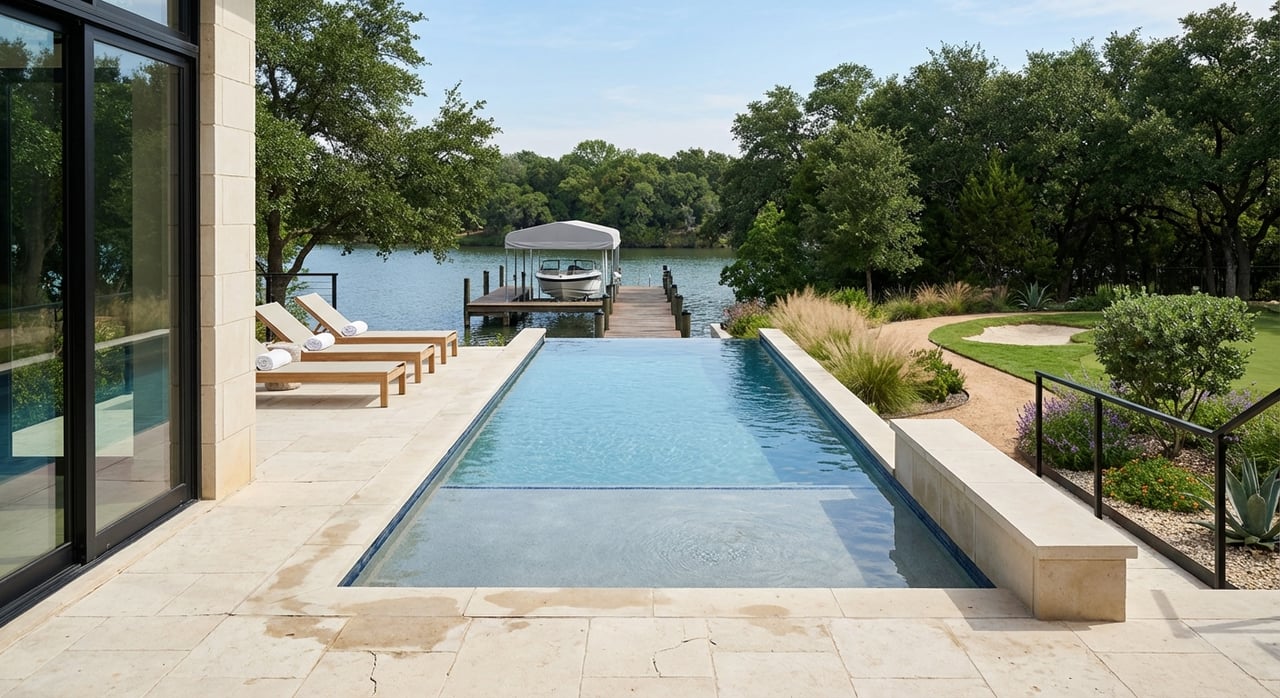
A true waterfront lot offers shoreline on Lake Travis and may include a private dock or the right to build one. Dock rights are not automatic. The Lower Colorado River Authority (LCRA) sets safety standards, size limits, and placement rules for docks and marinas. Before you write an offer, confirm dock legality, permits, and any HOA or recorded restrictions. Review the LCRA guidance on docks and marinas.
Water levels on Lake Travis fluctuate with rainfall and river operations. In low-water periods, some docks or ramps can become less usable. If you plan to boat year-round, verify dock depth and ramp access at both normal and low lake levels.
Community marinas and shared slips
Many buyers love the convenience of a marina without the upkeep of a private dock. Rough Hollow is the leading example. Its yacht club and marina offer slip options, fuel, and resort-style amenities, which creates a turnkey lake life. For details on services and membership, browse the Rough Hollow Yacht Club.
Slip availability and monthly fees vary by marina and season. If your home is not waterfront, a community marina can be the easiest way to keep a boat ready to go.
Lake-view homes and public access
Homes on elevated lots can deliver sweeping lake and Hill Country views at a lower premium than true waterfront. For casual access to the water, many residents use local parks and public areas. A popular choice is Lakeway City Park, which offers lakefront green space and easy recreation.
Marinas, services, and seasonal realities
Lake Travis supports many permitted marinas and thousands of slips across the basin. Local facilities provide wet slips, dry storage, fuel, pump-outs, and in some cases valet or concierge services. For a sense of services and slip types on the south shore, review West Beach Marina’s slip offerings. Availability and pricing shift with demand, lake levels, and season, so check early if a slip is central to your lifestyle.
Lake levels can impact ramps, docks, and marina operations during drought cycles. Local reporting has covered how recent low-water periods affected access and businesses while keeping boating safe with precautions. See this summary on historic low levels and boating conditions.
You should also plan for zebra mussels, an invasive species present in the Highland Lakes. Boats and docks often need more cleaning, and owners are asked to follow Clean, Drain, Dry practices. Learn about prevention and maintenance on the LCRA’s page for zebra mussels.
Golf and country-club life
Lakeway’s golf scene ranges from elite private clubs to high-quality daily-fee play. Your choice comes down to how often you plan to play and whether you want the full club lifestyle.
The Hills Country Club and Lakeway Country Club
These private clubs anchor Lakeway’s golf identity. The Hills complex features courses by Jack Nicklaus and Nicklaus II, including Flintrock Falls, along with practice facilities, tennis, fitness, and social programming. The older Live Oak and Yaupon courses at Lakeway Country Club remain a favorite for member play and neighborhood identity. For course background and location context, see this overview of The Hills and Lakeway courses.
Private clubs may require initiation fees and ongoing dues. Recent reinvestment, including course and practice-facility upgrades, is part of the value proposition for many members. You can read about one renovation milestone in this club reopening feature.
Falconhead Golf Club nearby
If you prefer to pay as you play, Falconhead is a strong daily-fee option just east of Lakeway. It offers a quality Hill Country layout without the commitment of a private membership. For course details and rates, visit Falconhead Golf Club.
Neighborhoods and what you get
Each part of Lakeway offers a different relationship to the water and the courses. Here is a quick guide to help you align location with lifestyle.
Rough Hollow
This master-planned, resort-style community is built around the lake. You get trails, swim and fitness amenities, parks, and direct access to the on-site yacht club and marina. Product types span from lock-and-leave villas to custom estates on view or waterfront lots. Neighborhood medians have recently ranged from the high $800,000s to around $1.3 million, with wide variance between view homes and true waterfront. Explore the community layout on Rough Hollow’s neighborhood page.
The Hills, Flintrock, and Flintrock at Hurst Creek
These gated, private club communities are tightly linked to The Hills and Flintrock courses. Expect guard-gated entries, social and dining offerings, and easy access to golf, tennis, and fitness facilities. Larger homes and estates here often trade well above the city median, with many properties in the $1 million to $2 million range depending on lot, finish, and club proximity. For course context and map orientation, see this Hills and Lakeway courses overview.
Live Oak and Yaupon corridors
The established neighborhoods around Lakeway’s older Live Oak and Yaupon courses feature a mix of traditional ranch homes and renovated properties. Some yards back to fairways, and lot sizes read more suburban than urban. If you like golf views and mature streetscapes, this area is worth a close look.
Inland Lakeway options
North Lakeway and other inland sections offer more conventional subdivisions and often more approachable pricing than gated club or waterfront areas. Many buyers coming from central Austin choose these neighborhoods to balance budget with quick access to marinas, parks, and courses. The overall Lakeway median in the mid-$600,000s to mid-$700,000s helps frame expectations, but lean on current MLS comps for each street and section.
Practical buyer checklist
Before you schedule showings or make an offer, use this checklist to protect your plans and budget.
- Dock rights and permits. Confirm who owns the submerged land and whether a private dock exists or can be built. Ask for recorded permits and any HOA rules. Start with LCRA’s standards for docks and marinas.
- Marina membership and slip status. Community marinas may require separate membership and have waitlists. If Rough Hollow is on your list, review the Yacht Club’s services and ask about current availability and transfer policies.
- Water levels and usability. Ask marinas and neighbors about low-water performance, slip depths, and alternative ramps. This low-water report highlights how conditions can shift by season.
- Invasive species maintenance. Budget time and cost for zebra mussel cleaning on boats and docks. See LCRA’s guidance on zebra mussels.
- Club membership model. If golf is key, clarify initiation fees, dues, and any required memberships tied to a specific neighborhood. The Hills and Lakeway course overview offers a starting point for membership research.
- Schools and commute. Lakeway is served primarily by Lake Travis ISD. You can review district accountability information on the LTISD site. Commutes to central Austin typically run 25 to 40 minutes depending on route and traffic. Factor proximity to Bee Cave and major corridors into your daily plan.
Match lifestyle to budget
- If you want a boat in the water with minimal upkeep, target a home tied to a strong community marina. You will pay less than true waterfront but still live the lake life.
- If golf and social programming lead the list, focus on The Hills or Flintrock clusters and budget for initiation and dues. Walk or cart to the club and treat it as your second living room.
- If you want views and outdoor living without private-dock costs, shop view lots or inland sections with quick access to marinas and parks.
- If you want the full waterfront experience, prepare for premiums and due diligence on docks, depths, and ongoing maintenance.
When you are ready to tour, you will want current, street-level MLS comps and a plan that fits the lake and golf experience you value most.
Looking for a clear path to the right Lakeway home? For hands-on guidance, neighborhood intel, and offer strategy from a senior broker, connect with Chet Smith. Call Chet for a free home consultation and let’s tailor a search to your lake-and-golf goals.
FAQs
Do Lakeway waterfront homes always include a private dock?
- No. Some waterfront lots include a recorded dock, while others rely on community marinas or public ramps. Always verify dock rights and LCRA compliance using the rules for docks and marinas.
How do low Lake Travis water levels affect boating access?
- Low-water periods can limit some ramps and reduce dock usability. Ask about slip depths, backup ramps, and contingency plans, and review local reporting on low-water conditions.
Is golf membership automatic if I buy in The Hills or Flintrock?
- No. Most private clubs require separate initiation and dues. Some neighborhoods may have optional social memberships, while others have requirements. Confirm details with HOA and club documents, and start with the Hills and Lakeway course overview.
What price premium should I expect for true waterfront in Lakeway?
- Premiums vary by exposure, depth, and dock potential. Waterfront estates commonly start well above the city median and can be several times the price of inland homes. Use current MLS comps to size the gap for your target cove or shoreline.
Where can I get a quick sense of Lakeway parks and public lake access?
- Begin with the city’s Parks and Trails and the specific page for Lakeway City Park. These pages outline amenities, trails, and lakefront access points.