Should You Buy Now or Wait for Mortgage Rates to Drop?
By Chet Smith | eXp Realty
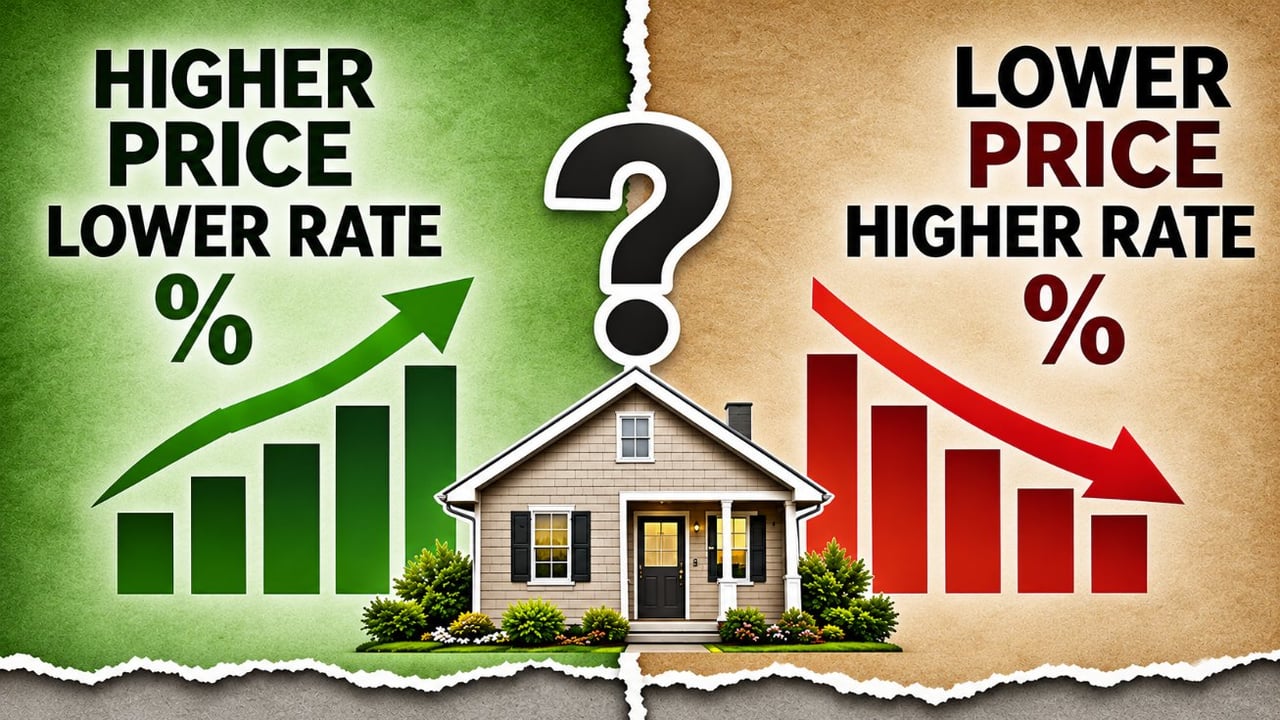
One of the biggest questions I hear from Eanes ISD home buyers is, "Should I buy now while interest rates are higher, or wait until rates come down?"
It's a good question, especially when you're considering a higher-priced home.
I regularly work with experienced mortgage lenders, and one thing we discuss is that the interest rate is only one part of the equation. The purchase price, monthly payment, down payment, and long-term equity can have an even bigger impact on your financial decision.
Let's look at an example that puts things into perspective.
The $1.7 Million Home vs. the $2 Million Home
Imagine you're considering purchasing a home for $1,700,000 today. Mortgage rates are approximately 7.50%.
You decide to wait because you believe rates will eventually drop by 1% to 1.5%. However, during that time, the home you wanted increases in value and now costs $2,000,000.
You got the lower interest rate, but you also paid $300,000 more for the same home.
Let's see how the numbers compare.
What Does Waiting Actually Cost?
Assuming a 20% down payment and a 30-year fixed mortgage:
Buy Today | Wait: 6.5% | Wait: 6.0% | |
|---|---|---|---|
Purchase price | $1,700,000 | $2,000,000 | $2,000,000 |
Down payment | $340,000 | $400,000 | $400,000 |
Mortgage amount | $1,360,000 | $1,600,000 | $1,600,000 |
Interest rate | 7.50% | 6.50% | 6.00% |
Monthly P&I | $9,509 | $10,113 | $9,593 |
Here's what stands out: Even if mortgage rates drop by a full 1.5 percentage points, your monthly principal and interest payment is still slightly higher because you paid $300,000 more for the home.
You also needed an additional $60,000 for your down payment.
In other words, you waited for a better interest rate but ended up purchasing the same home at a much higher price.
The Equity Advantage of Buying Earlier
Now let's look at the potential investment advantage.
If the $1.7 million home increases in value to $2 million, here's what your starting equity position could look like:
- Buy today: $2,000,000 home value minus $1,360,000 mortgage = $640,000 in equity.
- Buy later: $2,000,000 home value minus $1,600,000 mortgage = $400,000 in equity.
That's a potential $240,000 difference in equity simply because you purchased at the lower price.
This is where buying earlier can create a significant financial advantage. You have the opportunity to benefit from appreciation rather than paying the higher price after that appreciation has already occurred.
Why Mortgage Rates May Not Drop as Quickly as You Think
Mortgage rates are influenced by several economic factors, not just decisions made by the Federal Reserve.
Some of the biggest influences include:
- Inflation: Higher inflation generally puts upward pressure on mortgage rates.
- Treasury yields: Mortgage rates often follow movements in the 10-year Treasury market.
- Economic conditions: Strong economic growth can keep rates elevated.
- Federal Reserve policy: Fed decisions and expectations can influence markets, but mortgage rates don't automatically fall when the Fed cuts rates.
- Global events: Geopolitical uncertainty, oil prices, and financial market volatility can all affect borrowing costs.
The important thing to remember is that nobody can accurately predict exactly when rates will fall or how much home prices will increase while you're waiting.
You May Be Able to Improve Your Interest Rate Later
One strategy worth discussing with your mortgage lender is purchasing a home when the price and terms make sense, then refinancing if interest rates become more favorable.
There are also other options worth exploring, including temporary or permanent rate buydowns, different loan programs, and adjustable-rate mortgages.
Every buyer's situation is different, so it's important to compare the options with a qualified mortgage professional before making a decision.
Just remember that refinancing isn't guaranteed. It depends on future rates, your financial situation, property value, and lender qualification requirements. Refinancing also comes with costs.
My Advice: Look at the Big Picture
I don't believe buyers should rush into purchasing an Eanes ISD home just because they're worried about missing out. Your monthly payment needs to fit your budget, and you should feel comfortable with the purchase.
However, I also don't think waiting for the perfect interest rate is always the best financial strategy.
A lower mortgage rate can be helpful, but paying $300,000 more for the same home can quickly offset the benefit.
My recommendation is to work with a knowledgeable Eanes ISD Realtor and at least two or three mortgage lenders. Compare the purchase price, interest rates, monthly payments, cash required at closing, and potential long-term equity.
The goal isn't necessarily to buy when mortgage rates are at their lowest. It's to buy the right home at the right price, with financing that makes sense for your financial future.
If you're considering buying or selling in Austin or the surrounding areas, I'd be happy to help you evaluate your options.
Chet Smith | eXp Realty
ChetSellsAustin.com